
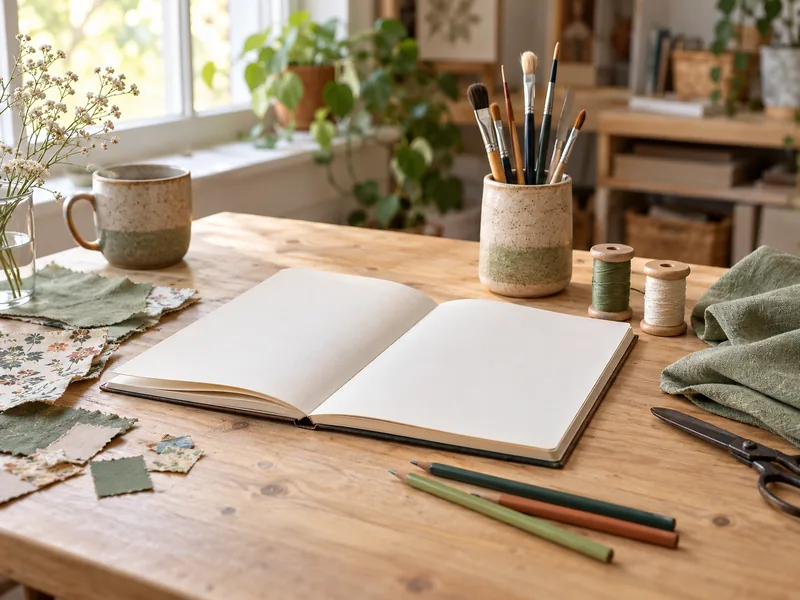
Drawing, sewing or paper crafts: a modest first project lets you discover what you enjoy before accumulating supplies. A comprehensive kit can be tempting, but it is not necessarily the easiest to use. First choose what you want to make, then build your list around the steps involved.
Choose a result small enough to finish
A hand-drawn card, a small textile project or a journal page are goals that are easy to describe. Find instructions suited to your skill level and read them all the way through before buying anything. Note the preparation time, any drying time and the cleanup involved. The ideal first project is one you can finish in the space and time you have, without taking on too many new techniques.
Separate essentials from conveniences
For each step, identify the tools and consumable supplies you need. Then look at what you already own and what could be used for several projects. A specialized tool may offer greater precision, but it is not always necessary when trying an activity for the first time. If you are considering a kit, compare its exact contents with your project. Duplicate accessories and colours you will not use are not automatically an advantage.
Check that the materials work together
Paper, paint, glue and thread should be chosen for their stated uses. Check the manufacturer’s recommendations for the surface, application and care. Do not assume that a craft product is suitable for contact with food or skin, or for baby items. If the project involves heat, blades, dust or chemicals, prepare the working conditions and protective equipment specified in the instructions before you begin.
Set up a workspace that is easy to tidy
Protect the surface as appropriate for the activity and keep product labels. Plan separate storage for sharp tools and materials that must be kept out of reach of children and pets. A project tray can make short sessions easier, provided the products are stored on it correctly. After finishing your first piece, note what you actually needed and did not have: this is a better starting point for your next purchase than a general equipment list.
A small inventory for a hand-drawn card
Adult trial project: a paper card without complex cutting techniques. Describe the result before comparing kits.
| Step | Actual need to consider |
|---|---|
| Choose the surface | Paper suitable for the chosen pencil, marker or medium; is a sample already available? |
| Draw the design | A tool you know how to use; a simple design does not require every colour. |
| Finish and put away | Stated drying time, suitable work surface and storage following the labels. |
First try a scrap of the same paper. Record what is actually missing after that trial. An accessory used in none of the steps can wait for another project.
Before you decide
Check off the points you have verified as you read. The site does not save this checklist.
General guidance, without product testing or personalized professional advice. Read about our method.